You are here
12 Years a Slave
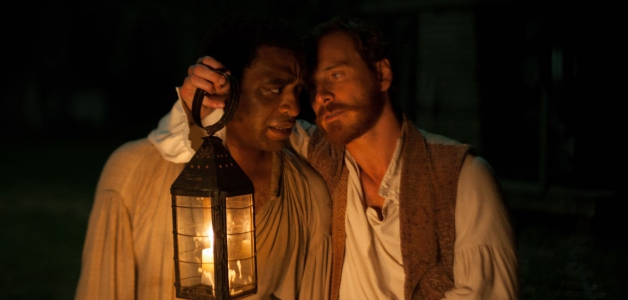
While American film icon Steve McQueen was known for fast cars and great escapes, a British director by the same name has become recognized for slow films and desperate circumstances. It was therefore logical to see him tackle 12 Years a Slave, based on the memoirs of Solomon Northup, a free, black, upstate New Yorker lured south on business, and sold into slavery during the mid 1800’s.
McQueen is no stranger to brutal oppression with his previous efforts including Hunger, a film about the 1981 Irish “no wash” protest. Where that film hinged on the dry and sober portrayal of Bobby Sands by Michael Fassbender, 12 Years is carried on the scarred back of Chiwetel Ejiofer’s Solomon.
His landmark performance is largely cerebral and reticent as Solomon learns that his survival depends upon quiet obedience. Yet, Ejiofer brings a sensativity not found in McQueen’s earlier protagonists. Solomon’s conflict is a vehicle for our own disregard of the topic as he moves through stages of denial, bitterness and finally acceptance.
This subtle performance plays briefly against Paul Giamatti’s miserly slaver, Benedict Cumberbatch’s God loving owner, Paul Dano’s ironic ‘master’, and Michael Fassbender’s masochistic cotton farmer. While there is also a brief and meaningful exchange with Brad Pitt’s character Bass, it is newcomer Lupita Nyong'o’s performance as slave girl Patsey that steals the film. She will almost certainly receive Academy recognition for her tragic role. Oscillating desperately between Fassbender’s obsession and his wife’s scorn, she cannot lay low or bide her time like Solomon.
My only critique of the film is the first act in which Ejiofer and his kin appear as a well-manicured dandies in an idealistic northern utopia. I’ll grant you that it makes for a starker contrast with his descent into slavery. However, it feels inauthenticly pristine in a way that undermines the realism one would expect in a McQueen film. Where Shame and Hunger fill the camera with subway graffiti and gritty prison cells respectively, 12 Years gives us Drunken History's Taran Killam in a top hat.
That aside, 12 Years builds into a brutal, highly emotional portrait of slavery. It is suprisingly not as characteristically dark and haunting as McQueen's earlier films. Ultimately the picture delivers a story of hope and perseverance – a worthy entry into his increasingly impressive catalogue of work.
Advahtisements